Area rugs are among the most versatile and widely used furnishings in Singapore homes. They define living spaces, add warmth to tiled floors, and bring pattern and texture to minimalist interiors. But they also collect dust, trap allergens, absorb spills, and — in Singapore’s humidity — become breeding grounds for dust mites and mould if not cleaned regularly. Knowing which area rug cleaning method actually works, and which one is right for your specific rug, makes a real difference in how clean your home actually is.
Why the Right Cleaning Method Matters
Area rugs come in a wider variety of materials and constructions than most people realise. A shaggy polyester rug from a furniture store behaves very differently from a flatwoven wool dhurrie or a hand-knotted viscose piece. Using the wrong cleaning method can cause irreversible damage — shrinkage, colour bleeding, pile flattening, or backing separation — that no amount of subsequent care can fix.
Before choosing a cleaning method, identify what your rug is made from. Check the care label if there is one. Look at the construction — pile height, weave type, and whether it is handmade or machine-made. These factors determine which methods are safe and which will cause damage.
The Main Area Rug Cleaning Methods Explained
Hot Water Extraction
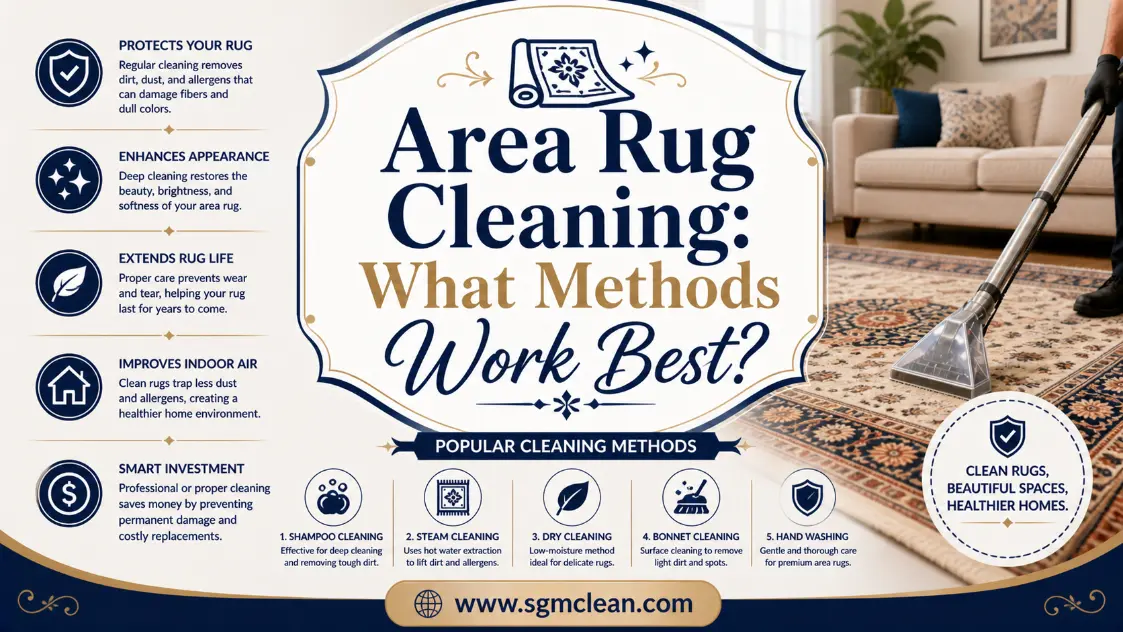
Hot water extraction involves injecting hot water and a cleaning solution deep into the rug pile under pressure, then extracting them together with loosened soil. This is the most thorough method for deep cleaning pile rugs and is effective on synthetic fibres like nylon, polypropylene, and polyester. It is also used on wool rugs when done correctly with temperature and moisture carefully controlled. The main consideration is drying time — four to eight hours depending on thickness. This method is not appropriate for silk rugs or some natural fibre rugs that are sensitive to heat and moisture.
Dry Cleaning (Low-Moisture Methods)
Low-moisture and dry cleaning methods use minimal water, which makes them suitable for rugs that cannot tolerate significant wetting — antique rugs, silk rugs, some delicate handmade pieces, and certain natural fibres. Drying time is much shorter, often under an hour, but these methods are generally less effective at addressing deep soiling and embedded contaminants.
Hand Washing
For valuable handmade rugs — whether Persian, oriental, or artisan-crafted — controlled hand washing by an experienced professional is often the safest deep-cleaning option. The rug is cleaned using gentle, pH-appropriate solutions, agitated carefully by hand, rinsed thoroughly, and then laid flat or hung for even drying. This is time-consuming and requires expertise, but it is the method least likely to cause damage to valuable or delicate pieces.
Matching the Method to Your Rug Type
- Synthetic rugs (nylon, polypropylene, polyester) — Hot water extraction works well and is the most thorough option. These rugs are durable and tolerate moisture.
- Machine-made wool rugs — Hot water extraction with controlled temperature and quality wool-safe solution. Avoid aggressive agitation.
- Handmade wool pile rugs — Controlled hand washing by a professional familiar with natural fibre rugs. Test dyes first.
- Silk or viscose rugs — Dry cleaning only. Water and heat cause irreversible damage to silk and viscose fibres.
- Flatwoven rugs (kilims, dhurries) — Hand washing or low-moisture cleaning. These rugs dry faster than pile rugs but need careful handling of the woven structure.
- Shaggy or high-pile rugs — Hot water extraction with thorough extraction and extended drying time. High-pile rugs hold moisture deeply and need complete drying to prevent mould.
DIY vs Professional Area Rug Cleaning
For small, lightweight synthetic rugs, careful home washing using a bathtub and a gentle detergent is possible — though proper rinsing and complete drying are critical. In Singapore’s climate, ensure the rug is completely dry before laying it back on the floor. Any residual moisture under a rug on a tiled floor can cause mould growth on both the rug backing and the floor surface.
For larger rugs, high-value pieces, natural fibre rugs, or any rug that needs a genuine deep clean, professional rug cleaning in Singapore is the right choice. Professional equipment achieves far better extraction and much more controlled drying than any home method.
How Often Should Area Rugs Be Cleaned?
- Vacuum weekly — more often in high-traffic areas or homes with pets
- Spot treat any spills immediately — do not let them dry and set
- Professional cleaning every 12 to 18 months for rugs in normal use
- More frequently — every 6 to 12 months — for rugs in homes with children, pets, or allergy sufferers
M Clean SG provides area rug cleaning for Singapore homes using the appropriate method for each rug type. Learn more about their home cleaning services or get in touch to discuss your specific rug and its cleaning requirements.
Choosing the right cleaning method for your area rug is not overcomplicated — but it does require knowing your rug and respecting its material. Get it right, and your rug will look and last far better than one that has been cleaned the wrong way.