
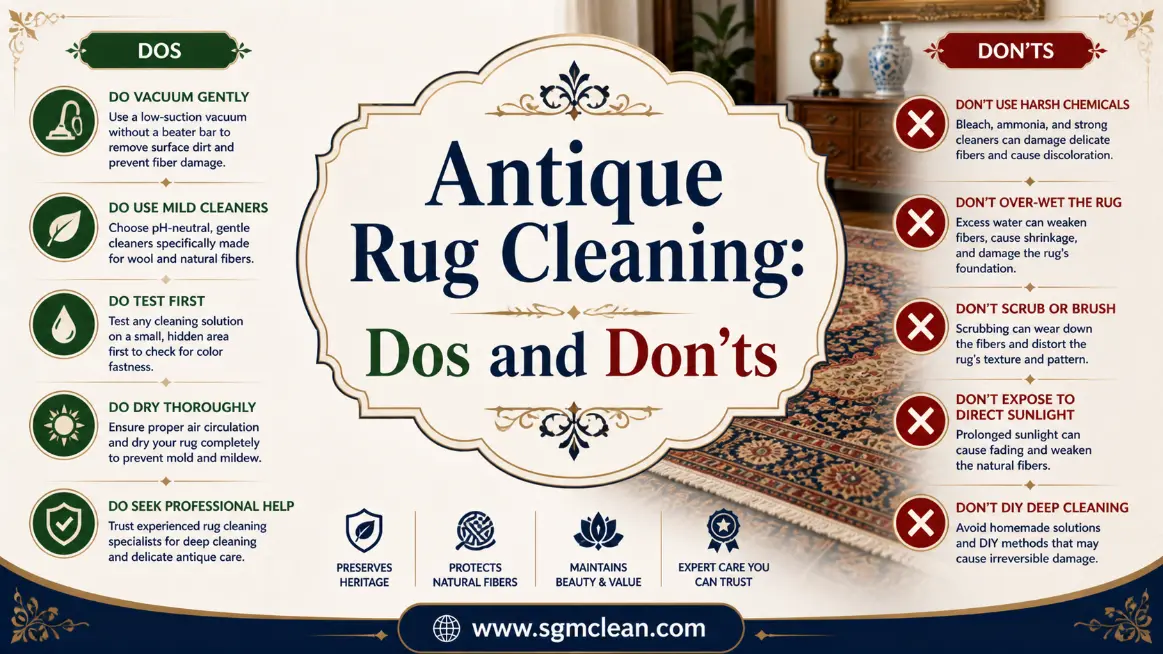
An antique rug is not simply a floor covering — it is a textile artefact, often with decades or centuries of history woven into it. Whether you have inherited a family heirloom, purchased a piece at auction, or collected antique rugs deliberately, cleaning them correctly is one of the most important decisions you will make as a rug owner. Done properly, cleaning preserves and even enhances an antique rug. Done incorrectly, it can cause irreversible damage that no restoration expert can fully undo.
Understanding What Makes Antique Rugs Vulnerable
- Aged natural dyes — Many antique rugs were dyed with vegetable and mineral dyes that become more sensitive with age. Incorrect cleaning can cause colour bleeding, fading, or patchy discolouration that is extremely difficult to reverse.
- Weakened fibres — Wool, silk, and cotton fibres degrade over time. What looks intact on the surface may have significantly reduced tensile strength at the foundation level. Aggressive cleaning can cause pile loss, fringe breakage, or structural distortion.
- Original patina — The aged sheen and colour depth that make antique rugs desirable are a function of time, use, and natural oils in the fibres. Harsh cleaning strips this patina permanently, reducing both the rug’s beauty and its monetary value.
- Accumulated repairs — Many antique rugs have been repaired at various points. Different dye lots and fibre ages in repaired areas mean they may behave unpredictably when wet.
The Dos of Antique Rug Cleaning
Do vacuum gently and regularly
Regular, gentle vacuuming is the single most beneficial maintenance habit for an antique rug. Use a low-suction setting, disable the beater bar, and vacuum in the direction of the pile. Pay attention to the underside occasionally — embedded grit at the foundation is one of the primary causes of fibre degradation over time.
Do rotate the rug periodically
Rotating your antique rug 180 degrees every six months distributes foot traffic and UV light exposure more evenly. Uneven wear and fading are irreversible in antique rugs; prevention is the only solution.
Do use a quality rug pad
A proper pad protects the underside, allows air circulation, and reduces stress on the rug’s foundation from foot traffic. In Singapore’s humid climate, the air circulation a pad provides is particularly valuable in preventing moisture accumulation beneath the rug.
Do test before any wet treatment
Before applying any liquid — even plain water — to an antique rug, test colour stability on a very small, inconspicuous area. Dampen a white cloth and press it firmly against the rug surface. If any colour transfers, wet cleaning will cause dyes to bleed, and the rug should only be professionally dry-cleaned.
Do address spills immediately but carefully
Blot — never rub — using a clean white cloth. Apply minimal moisture. Work from the outer edge of the spill inward. Allow the area to dry completely before returning the rug to normal use.
The Don’ts of Antique Rug Cleaning
Don’t use any standard carpet cleaning product
Consumer carpet cleaning sprays, shampoos, and foam cleaners are formulated for modern synthetic carpets. Their pH levels and chemical composition are unsuitable for aged natural fibres and dyes. Even one application of the wrong product can strip natural oils, cause irreversible colour change, or leave residue that attracts dirt.
Don’t attempt hot water extraction without specialist assessment
High-pressure hot water extraction is not appropriate for most antique rugs without careful specialist assessment first. The combination of heat, pressure, and moisture is too aggressive for aged fibres and sensitive dyes.
Don’t put an antique rug in a washing machine
The combination of agitation, heat, spin, and unsuitable detergents will cause catastrophic damage to fibre and structure alike. This should never be attempted under any circumstances.
Don’t dry an antique rug in direct sunlight
Sunlight fades natural dyes permanently and does so unevenly, creating patchy discolouration. After any wet treatment, dry the rug in a well-ventilated, shaded area with good airflow on both sides.
Don’t delay professional assessment for mould or pest damage
If you notice any signs of moth damage — bare patches, larvae, or webbing in the pile — or mould growth, do not attempt to treat it yourself. Get the rug to a professional immediately. Both moth larvae and mould can cause rapidly accelerating damage that becomes permanent if not correctly addressed.
When Professional Cleaning Is the Only Right Answer
For antique rugs, professional cleaning is the correct choice for any cleaning beyond basic vacuuming and immediate spill blotting. A professional experienced with antique and delicate rugs will conduct a fibre analysis, test all dyes, and select the gentlest effective cleaning method. For most antique pieces, this will be a carefully controlled hand wash with appropriate pH solutions, followed by flat drying with good air circulation.
Professional rug cleaning in Singapore for antique pieces requires expertise that not all cleaning companies offer. Look for a provider who is willing to discuss the specific rug, ask questions about its history and condition, and recommend a cleaning approach rather than applying a one-size-fits-all method.
M Clean SG handles delicate and antique rugs with the careful approach they deserve. If you are uncertain about how to clean a valuable piece, their team can assess your rug and advise on the safest path forward. You can explore their services or get in touch for a consultation before committing to any cleaning method.
With antique rugs, the guiding principle is always the same: when in doubt, do less. Gentle, conservative care over time preserves far more than aggressive cleaning ever can.