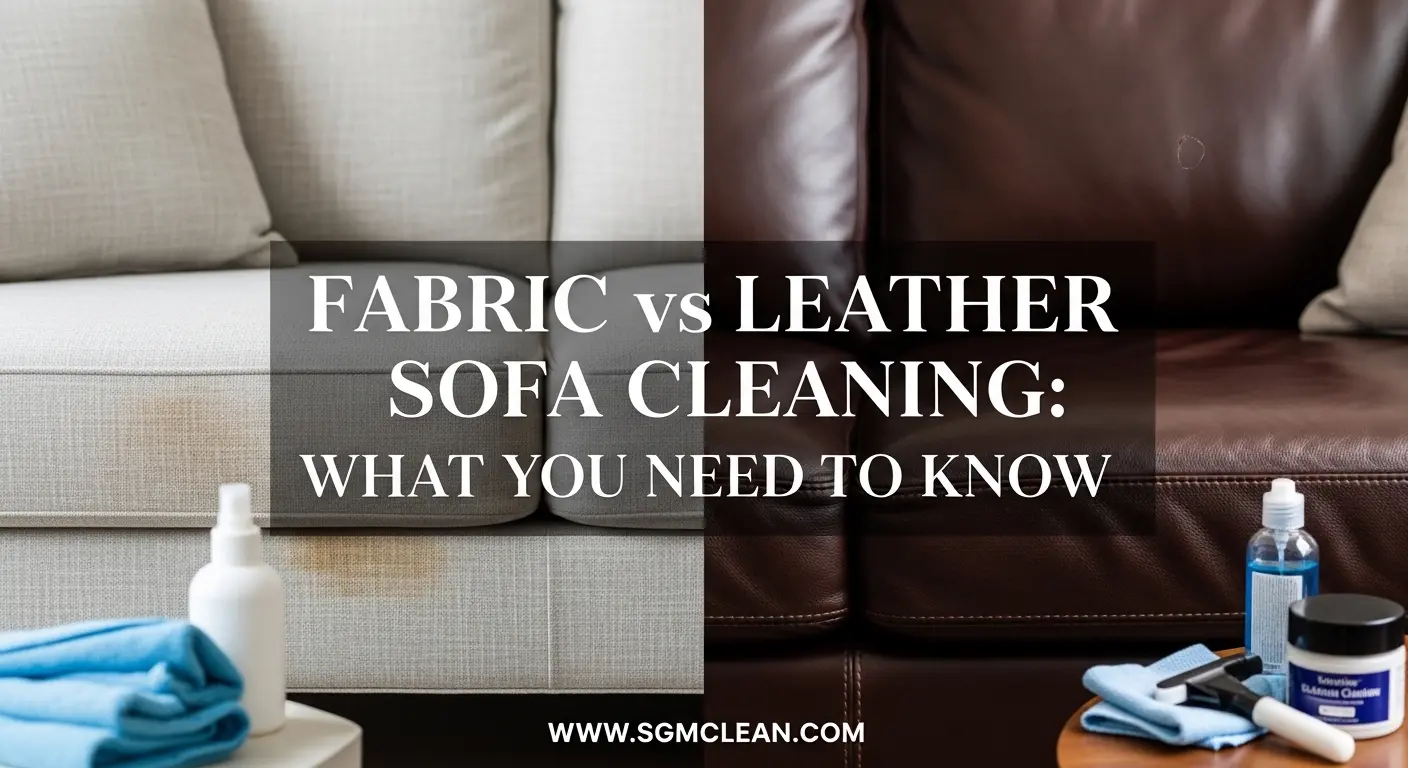
When it comes to sofa cleaning in Singapore, one of the most important things to understand is that fabric and leather sofas require fundamentally different approaches. Using the wrong method or product on either material can cause permanent damage — fading, cracking, shrinkage, or watermarks that are nearly impossible to reverse. Whether you own a plush fabric couch in your HDB flat or a sleek leather sofa in a condominium living room, knowing the difference will help you care for your furniture properly and get the most from any professional cleaning service you hire.
How Fabric Sofas Get Dirty — and Why Cleaning Them Is Different
Fabric sofas are highly absorbent. Spills, body oils, sweat, food crumbs, pet hair, and dust all work their way deep into the fibres over time. In Singapore’s humid environment, this moisture-absorbing quality also makes fabric upholstery a prime breeding ground for dust mites and mould spores if not properly maintained.
Common fabric types found in Singapore homes include microfibre, polyester blends, linen, cotton, and velvet. Each responds differently to cleaning:
- Microfibre — Durable and stain-resistant but requires careful cleaning to avoid watermarks. Dry cleaning solvents or foam-based methods work well.
- Cotton and linen — Can shrink or distort if over-wet. Low-moisture cleaning or hot water extraction with controlled water volume is recommended.
- Velvet — Extremely sensitive. Over-wetting or harsh scrubbing crushes the pile and leaves permanent marks. Dry foam or light steam is usually preferred.
- Polyester blends — Among the most resilient. Respond well to hot water extraction and standard upholstery cleaning solutions.
For most fabric sofas, professional hot water extraction (sometimes called steam cleaning) is one of the most effective deep cleaning methods. It flushes out embedded dirt, neutralises allergens, and refreshes the fibres. However, drying time is a real concern in Singapore — high humidity can slow drying and encourage mould growth if airflow is inadequate after cleaning.
How Leather Sofas Accumulate Grime — and Why They Need Specialist Care
Leather sofas look and feel premium, but they require more careful maintenance than most owners realise. Leather is a natural material that breathes — and because of this, it absorbs body oils, perspiration, and airborne grease over time. In Singapore’s warm climate, this process happens faster, particularly on heavily used seats and armrests.
The main categories of leather you’ll encounter in Singapore homes include:
- Full-grain and top-grain leather — Genuine, high-quality leather. More durable and develops a patina over time, but reacts poorly to harsh chemicals or over-cleaning.
- Bonded or faux leather — Made from leather scraps or synthetic materials. More affordable, but prone to peeling and cracking if cleaned incorrectly.
- Nubuck and suede — Buffed leather surfaces that are highly sensitive to water. Require dry cleaning methods exclusively.
The biggest mistake people make with leather sofas is using generic household cleaners, baby wipes, or multi-purpose sprays. These products often contain alcohol, bleach, or silicone — all of which can strip the leather’s natural oils and cause cracking or discolouration. Professional leather sofa cleaning uses pH-balanced leather cleaners followed by leather conditioners to restore moisture and protect the surface.
Key Differences at a Glance: Fabric vs Leather Sofa Cleaning
Understanding the practical differences helps you make better decisions about how to maintain and clean your sofa:
- Cleaning methods — Fabric typically uses wet extraction or dry foam; leather requires pH-balanced cleaners and conditioning.
- Drying time — Fabric sofas need proper drying to prevent mould in Singapore’s humidity; leather dries faster but must not be over-wet.
- Product safety — Strong detergents suit many fabric types but will damage most leathers. Leather-specific products are non-negotiable.
- Frequency — Fabric sofas generally need professional cleaning more often due to their absorbency. Leather sofas benefit from regular conditioning in addition to periodic deep cleaning.
- Stain treatment — Fabric stains often respond to enzymatic or foam-based spot cleaners. Leather stains require careful spot treatment with leather-safe solutions only.
Can You Clean Either Type Yourself at Home?
Light maintenance on both fabric and leather sofas can be done at home with the right products. Vacuuming fabric sofas weekly removes surface dust and reduces dust mite build-up. Wiping leather sofas with a lightly damp, lint-free cloth after use removes surface oils. However, there is a clear limit to what home cleaning can achieve, particularly for embedded stains, odours, or heavy soiling.
For fabric sofas, attempting a deep clean without professional equipment often results in over-wetting, which in Singapore’s humidity can lead to mould developing within the cushion padding — something you cannot see but will certainly smell. For leather sofas, incorrect home treatment risks permanent surface damage that cannot be reversed without costly re-dyeing or replacement.
When to Call a Professional for Either Type
As a general guide, fabric sofas in Singapore homes benefit from professional cleaning at least once a year — more frequently in households with children, pets, or allergy sufferers. Leather sofas typically need professional attention once or twice a year, combined with regular home conditioning between sessions.
If your sofa has developed visible stains, persistent odours, a dull or sticky surface, or if it simply has not been professionally cleaned in over a year, it is time to call in a professional service. In Singapore’s climate, waiting longer only gives dust mites and bacteria more time to establish themselves in your upholstery.
M Clean SG handles both fabric sofa cleaning and leather sofa cleaning across Singapore, using methods and products matched specifically to the upholstery type. Whether your sofa is a well-loved fabric couch or a premium leather piece, professional cleaning that respects the material will extend its life and keep your living space genuinely fresh. To make a booking or enquire about the right approach for your sofa, visit the Contact Us page.
The bottom line: fabric and leather are not interchangeable when it comes to sofa cleaning. Treat them differently, use appropriate methods for each, and your furniture will reward you with years of clean, comfortable use.