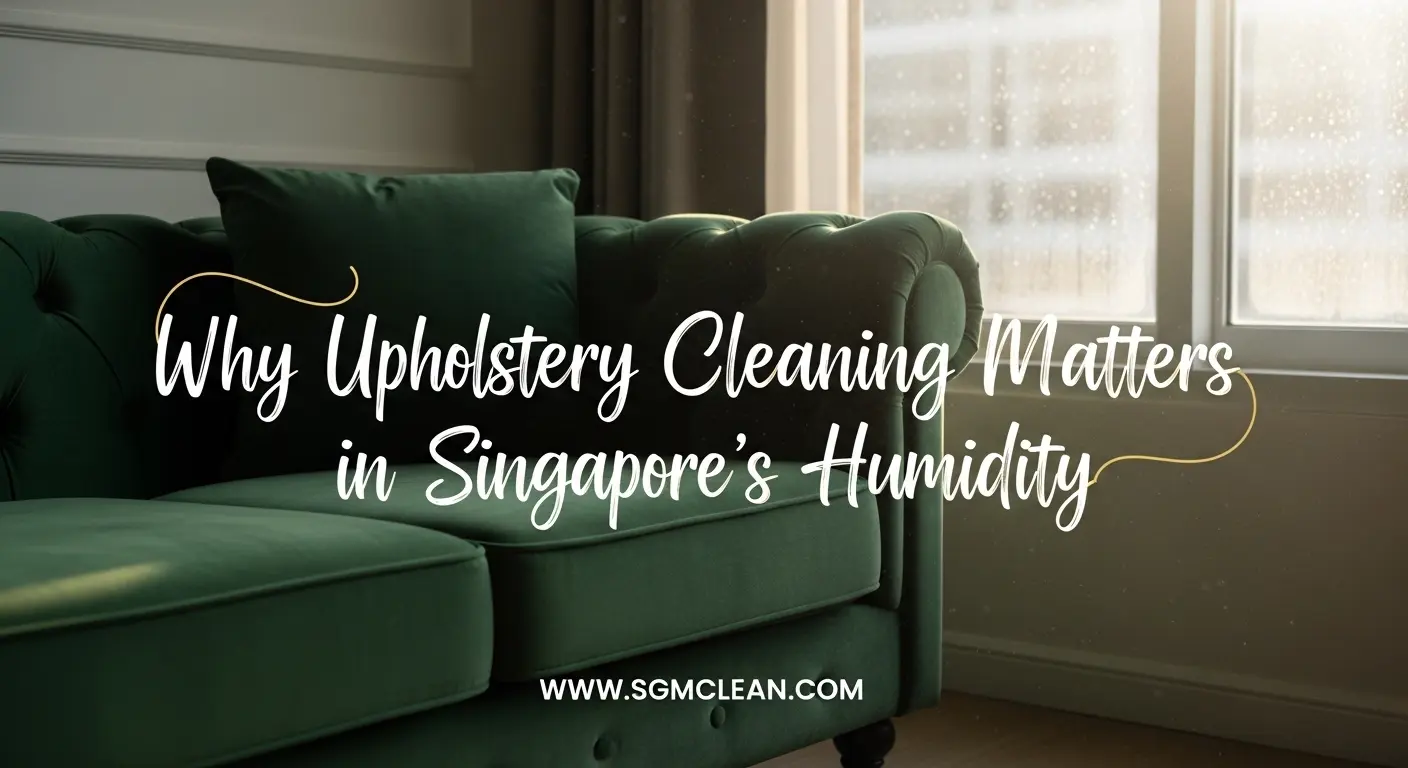
Singapore’s tropical climate is one of the most demanding environments for indoor furnishings anywhere in the world. With year-round temperatures averaging 26 to 32 degrees Celsius and humidity levels that regularly exceed 80 percent, upholstered furniture faces conditions that accelerate soiling, promote microbial growth, and cause materials to deteriorate faster than in temperate climates. Understanding why upholstery cleaning matters here — and what is actually happening inside your sofa, chairs, and curtains — is the first step to maintaining a genuinely healthy home or workplace.
What Singapore’s Humidity Does to Your Upholstery
High humidity creates a cycle that most people don’t think about. When ambient moisture levels are elevated, fabric upholstery absorbs that moisture continuously. This creates a warm, damp environment within the cushioning and foam that is ideal for several types of biological growth:
- Dust mites — These microscopic creatures thrive in soft furnishings, feeding on dead skin cells shed naturally by humans and pets. In Singapore’s humidity, dust mite populations in untreated upholstery can reach levels that significantly affect indoor air quality and trigger respiratory symptoms.
- Mould and mildew — Fabric and foam padding that retains moisture becomes vulnerable to mould growth, particularly in less-ventilated areas of a home or in rooms that are not air-conditioned consistently. Mould in upholstery has a distinctive musty smell and is a serious respiratory hazard.
- Bacteria — Warm, moist upholstery that has absorbed body oils, sweat, and food particles becomes a breeding ground for bacteria. This contributes to odour and can pose hygiene concerns, particularly in homes with children or elderly family members.
None of these issues are visible, which is precisely why they are so commonly underestimated. A sofa can look clean while harbouring a significant microbial load beneath the surface.
The Health Impact of Neglected Upholstery in Singapore Homes
Indoor air quality in Singapore is a real concern. Homes here are typically sealed against the heat, meaning the same air — and whatever particles are suspended in it — circulates continuously through air conditioning systems. Upholstered furniture is one of the largest surfaces in any living space and one of the most significant contributors to indoor airborne allergens.
Dust mite waste particles, mould spores, and pet dander from fabric sofas, chairs, and cushions become airborne during normal household activity — sitting down, shifting position, or even just air movement from a fan. For people with asthma, eczema, or rhinitis, this is a well-documented trigger. But even in households without diagnosed conditions, chronic low-level exposure to allergen-heavy upholstery affects sleep quality, energy levels, and general wellbeing.
Regular professional upholstery cleaning is not simply a cosmetic service — in Singapore’s climate, it is a practical health measure.
How Professional Upholstery Cleaning Addresses These Problems
Professional cleaning goes far beyond what vacuuming or surface wiping can achieve. The methods used by specialist cleaners are designed specifically to address deep-seated soiling and microbial build-up:
- Hot water extraction — Injects a controlled amount of hot water and cleaning solution deep into the upholstery, then extracts it along with dissolved contaminants, embedded particles, and a significant portion of the moisture. Effective for most fabric types.
- Dry foam cleaning — A low-moisture method suitable for delicate fabrics or moisture-sensitive upholstery. The foam encapsulates dirt particles which are then extracted without introducing significant liquid to the material.
- Steam cleaning — High-temperature steam penetrates upholstery fibres and effectively kills dust mites and bacteria without chemical residues.
- Specialised deodorising treatment — Applied after cleaning to neutralise odour-causing bacteria and leave upholstery genuinely fresh, not just masked with fragrance.
Critically, professional cleaners also ensure proper drying — using industrial fans or dehumidifiers — which is essential in Singapore’s climate. A sofa left damp after cleaning is at risk of mould developing within the padding, undoing the benefit of the clean entirely.
Upholstery Cleaning in Commercial Settings
In offices, hotels, restaurants, and commercial spaces across Singapore, upholstered furniture faces even heavier use. Office chairs, waiting room sofas, and restaurant seating accumulate oils, perspiration, and general soiling at a far faster rate than domestic furniture. In commercial settings, the hygiene implications extend to staff wellbeing and the impression made on clients and customers.
Regular professional upholstery cleaning in commercial environments is also relevant from a practical maintenance perspective — furniture that is well-maintained lasts longer, reducing replacement costs and contributing to a more professional appearance throughout the workplace.
How Often Should Upholstery Be Cleaned in Singapore?
Given the climate, a cleaning schedule more frequent than what is typically recommended in temperate countries is advisable. As a practical guide:
- Residential fabric sofas and chairs — at least once a year, ideally every six to nine months for households with children, pets, or allergy sufferers
- Leather sofas — professional deep cleaning once a year, with regular home conditioning every three to four months
- Office chairs and commercial upholstery — every six months is a reasonable standard for high-use environments
Between professional sessions, regular vacuuming of fabric upholstery using an upholstery attachment reduces surface dust accumulation and slows the build-up of allergens.
For homeowners, landlords, and businesses across Singapore looking for reliable upholstery cleaning, M Clean SG provides professional cleaning services for sofas, chairs, and all types of fabric and leather upholstery. Working across residential properties and commercial spaces island-wide, their team uses appropriate methods and professional-grade products suited to Singapore’s demanding climate. For more information on the full range of services available, visit the Our Services page.
In Singapore’s humidity, clean upholstery is not a luxury — it is a meaningful contribution to the health, comfort, and air quality of every space you occupy. Regular professional cleaning is the most effective way to achieve and maintain that standard.