
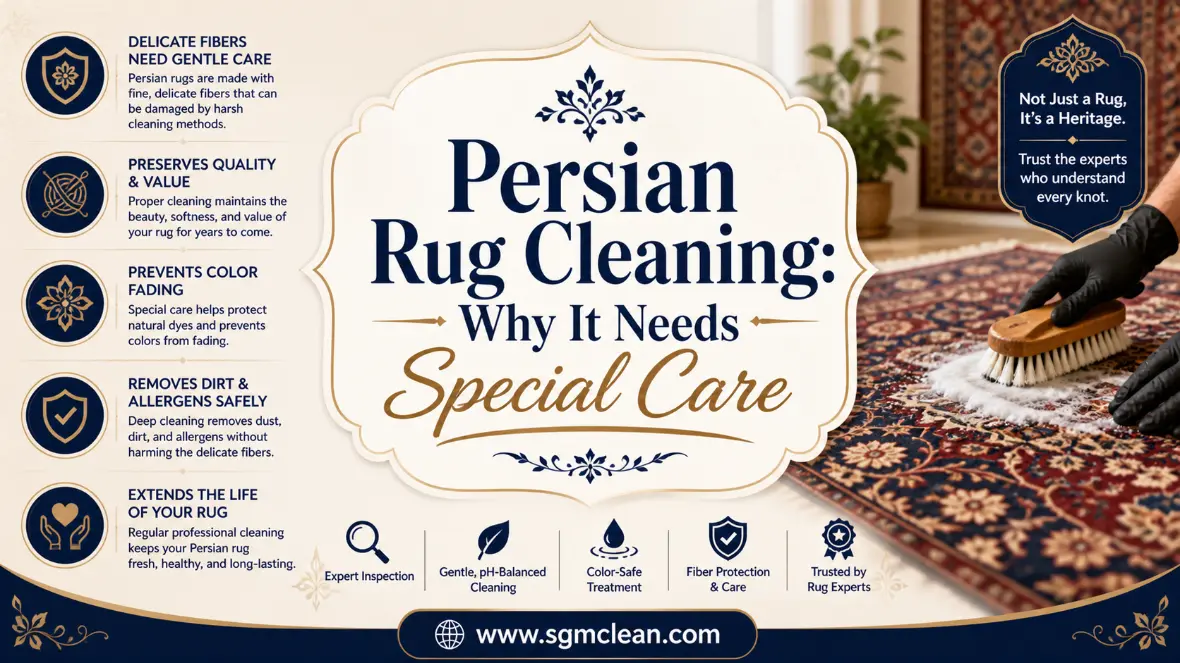
A genuine Persian rug is one of the most valuable textiles you can own. Whether it is a family heirloom, a decorative centrepiece, or a considered investment piece, Persian rugs require a level of care that sets them apart from ordinary floor coverings. Understanding why Persian rug cleaning is different — and what can go wrong when it is done incorrectly — could save your rug from permanent damage.
What Makes Persian Rugs Different from Regular Carpets
Persian rugs are traditionally handmade using natural fibres — most commonly wool, silk, or a combination of both — and natural dyes. The construction is dense and intricate, with knot counts that can reach hundreds per square inch. This craftsmanship is what makes them beautiful and durable, but it is also what makes improper cleaning so destructive.
Unlike machine-made synthetic carpets, Persian rugs do not respond well to the kind of aggressive cleaning methods that work fine on commercial pile carpets. Wool fibres can shrink and felt when exposed to high heat or agitation. Natural dyes can bleed or fade when treated with the wrong pH cleaning solution. The foundation fibres — typically cotton or wool — can weaken and distort if the rug absorbs too much water and is not dried correctly.
In Singapore’s humid climate, these risks are compounded. A rug that stays damp for too long after cleaning can develop mould deep in the pile, which is extremely difficult to treat once established.
The Risks of Cleaning a Persian Rug the Wrong Way
Many well-intentioned homeowners have caused serious damage to valuable rugs by cleaning them as if they were ordinary carpets. The most common mistakes include:
- Steam cleaning with high heat — Hot water extraction can cause wool to felt, warp the rug’s foundation, and cause colour bleeding in natural dyes.
- Using alkaline cleaning products — Wool is highly sensitive to alkaline chemicals. Products designed for synthetic carpets can strip the natural lanolin from wool fibres, causing brittleness and dulling the rug’s sheen.
- Over-wetting — Saturating a Persian rug risks warping the foundation, causing the backing to contract differently from the pile, and creating conditions for mould growth.
- Mechanical agitation — Rotating brushes used in standard carpet cleaning machines can break down the pile and distort the knot structure over time.
- Incorrect drying — Drying flat on a hard floor or in the sun can cause shape distortion and colour fading. Rugs need to be dried evenly, with good air circulation on both sides.
What Proper Persian Rug Cleaning Involves
Professional cleaning of a Persian rug is a considered, multi-step process. It typically begins with a thorough dry dusting to remove the deep-embedded particulate matter that regular vacuuming does not reach — this is often the largest source of damage in rugs, as grit slowly cuts through fibres from the inside.
Next, the rug is assessed for colour stability. Natural dyes vary in their sensitivity, so a dye test is performed before any wet cleaning begins. The rug is then washed using a pH-neutral solution appropriate for natural fibres, with careful hand or gentle machine agitation to lift soil without stressing the structure. Rinsing must be thorough to ensure no cleaning residue is left in the pile.
Controlled drying is the final and often most critical step. The rug should be hung or laid flat in a well-ventilated area with air circulation on both sides, away from direct sunlight. Proper drying can take several hours to a full day depending on the rug’s thickness.
For professional rug cleaning in Singapore, choosing a service with genuine experience handling natural fibre rugs and understanding of how dyes behave is essential. Not all carpet cleaners have this expertise.
How Often Should a Persian Rug Be Professionally Cleaned?
For a rug in regular use in a Singapore home, professional cleaning every one to two years is a reasonable guideline. In between, regular vacuuming on the pile side (not the back) and rotating the rug every six months to distribute wear evenly helps extend the time between deep cleans.
A rug placed in a high-footfall area, or in a household with children or pets, may need professional attention more frequently. Any significant spill should be addressed immediately — blot gently with a clean cloth, avoid rubbing, and consider professional spot treatment if the stain does not lift cleanly.
Spotting Damage Early
Regular inspection of your Persian rug — including the underside — helps catch problems early. Signs that your rug needs professional attention include:
- Colour bleeding or browning at the edges after a spill
- Moth damage — small bare patches or visible larvae in the pile
- Musty odour that does not clear with airing
- Foundation fibres becoming visible through a thinning pile
- Warping or buckling along the edges or fringe
Trusting Your Rug to the Right Hands
A Persian rug that has been properly maintained and professionally cleaned at the right intervals can last for generations. The key is ensuring that the people handling it understand natural fibre construction, know how to manage dyes safely, and have the right equipment for controlled washing and drying.
M Clean SG handles rug cleaning for Singapore homes and takes a careful approach to delicate and valuable rugs. If you are unsure about the right cleaning method for your Persian rug or want advice before proceeding, their team can assess your rug and recommend the safest approach. Visit their website or reach out directly to discuss your specific rug and cleaning needs.
When it comes to Persian rugs, careful and informed cleaning is always the right investment.