Maintaining clean, well-preserved furniture in Singapore’s humid climate is an ongoing challenge that goes beyond regular dusting and wiping. High humidity — which regularly exceeds 80 percent outdoors and rarely drops below 55 to 60 percent even in air-conditioned interiors — creates specific conditions that accelerate the soiling, deterioration, and biological contamination of furniture across almost every material category. Understanding how to manage these conditions practically is the foundation of good furniture care in Singapore.
Understanding What Humidity Does to Furniture
Moisture is the underlying cause of most humidity-related furniture problems in Singapore. Different materials respond to persistent ambient moisture in different ways:
- Fabric upholstery — Absorbs moisture from the air, creating a warm, damp internal environment that is ideal for dust mite reproduction and mould growth. Fabrics also retain odour more readily when they hold moisture.
- Leather — While leather is less porous than fabric, Singapore’s combination of humidity and body heat causes accelerated absorption of sweat and oils. Leather that is not regularly conditioned can become sticky, develop surface breakdown, or crack as the balance of moisture shifts between the air and the material.
- Timber — Wood expands in high humidity and contracts when conditions dry out. In Singapore, this cycle is continuous and causes joint loosening, surface checking, and — in unfinished or poorly finished timber — warping and mould growth in the grain.
- Foam and padding — The interior padding of sofas, chairs, and mattresses retains moisture persistently in humid conditions, creating ideal conditions for mould and bacteria deep within upholstered pieces — often without any visible external sign until the odour becomes noticeable.
Practical Strategies for Managing Humidity Around Furniture
Managing the environment around your furniture is as important as cleaning the furniture itself. Several practical measures reduce the humidity-related burden on your home furnishings:
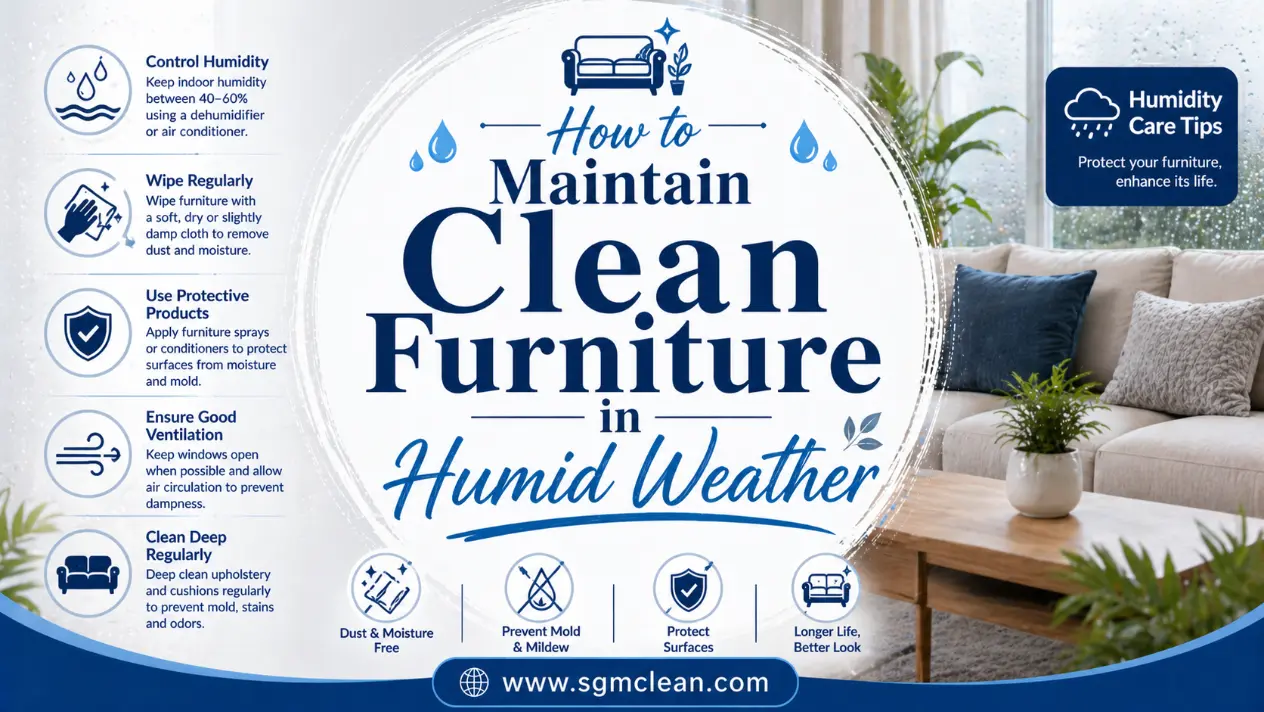
- Maintain consistent air conditioning — Keeping your home at a stable, cooled temperature reduces ambient humidity and slows the rate of moisture absorption into upholstered furniture. Inconsistent air conditioning — on during the day, off at night — creates cycles of humidity change that are more damaging than stable conditions.
- Use a dehumidifier in problem areas — Bedrooms, storage rooms, and any enclosed space with limited air circulation benefit from a dehumidifier that actively removes moisture from the air. Aim to maintain indoor humidity below 60 percent where possible.
- Ensure good air circulation — Do not push furniture directly against walls, particularly in less well-ventilated rooms. A small gap allows air movement around the back and sides of furniture, reducing moisture accumulation against surfaces that are not regularly cleaned.
- Open windows strategically — On days when outdoor humidity is lower than indoor levels — often in the early morning after air conditioning has run overnight — brief ventilation can help. However, on typical Singapore days, opening windows may introduce more moisture than it removes.
Material-Specific Maintenance Tips for Humid Conditions
Fabric Upholstery
Vacuum fabric sofas and chairs weekly using an upholstery attachment. This removes the surface debris and dead skin cells that feed dust mites and accumulate faster in humid conditions. Use a mattress or sofa protector where practical to create a barrier against moisture and soiling. Address spills immediately and ensure thorough drying — in Singapore’s humidity, a damp spot left untreated can develop mould within the cushion padding within days. A professional extraction clean every six to twelve months is essential for removing what home maintenance cannot reach.
Leather Furniture
Wipe leather surfaces weekly with a dry or barely damp lint-free cloth. In Singapore’s climate, body oils transfer to leather faster due to perspiration, making this regular wipe-down more important than in cooler climates. Apply leather conditioner every three to four months — never skip this step in Singapore, as air conditioning dries out leather from the surface even while humidity outdoors remains high. Keep leather furniture away from direct air conditioning vents, which creates localised drying that accelerates surface cracking.
Timber Furniture
Dust timber surfaces weekly with a dry microfibre cloth. For periodic cleaning, use a damp cloth wrung out thoroughly — never a wet cloth. Apply an appropriate wood conditioner or polish every few months to maintain the protective surface finish and buffer the wood against humidity fluctuations. Check joints and fixings periodically, as Singapore’s humidity cycle causes movement that can loosen these over time.
Marble and Stone Surfaces
Wipe marble surfaces dry after any moisture contact. In Singapore’s humidity, condensation from cold drinks or surface dampness from cleaning can leave water marks if not addressed. Use only pH-neutral stone cleaners and ensure surfaces are sealed periodically to reduce porosity and staining susceptibility in the humid environment.
When Home Maintenance Reaches Its Limit
In Singapore’s climate, home maintenance alone — however consistently applied — cannot prevent the gradual build-up of biological contamination within upholstered furniture. Dust mites, mould, and bacteria in fabric and foam require professional extraction and sanitising treatment to address effectively. The question is not whether professional cleaning is necessary, but how regularly it should be scheduled.
For Singapore homeowners and businesses looking for professional furniture cleaning in humid conditions, M Clean SG provides a full range of residential and commercial furniture cleaning services. Their team understands Singapore’s climate and uses methods and products appropriate to local conditions. For full details on the services available, visit the Our Services page.
Maintaining clean furniture in Singapore’s humid weather is a continuous process rather than an occasional task. Consistent home maintenance combined with regular professional cleaning keeps your furniture in better condition, extends its useful life, and ensures your living or working environment remains genuinely fresh — regardless of what the climate outside is doing.