
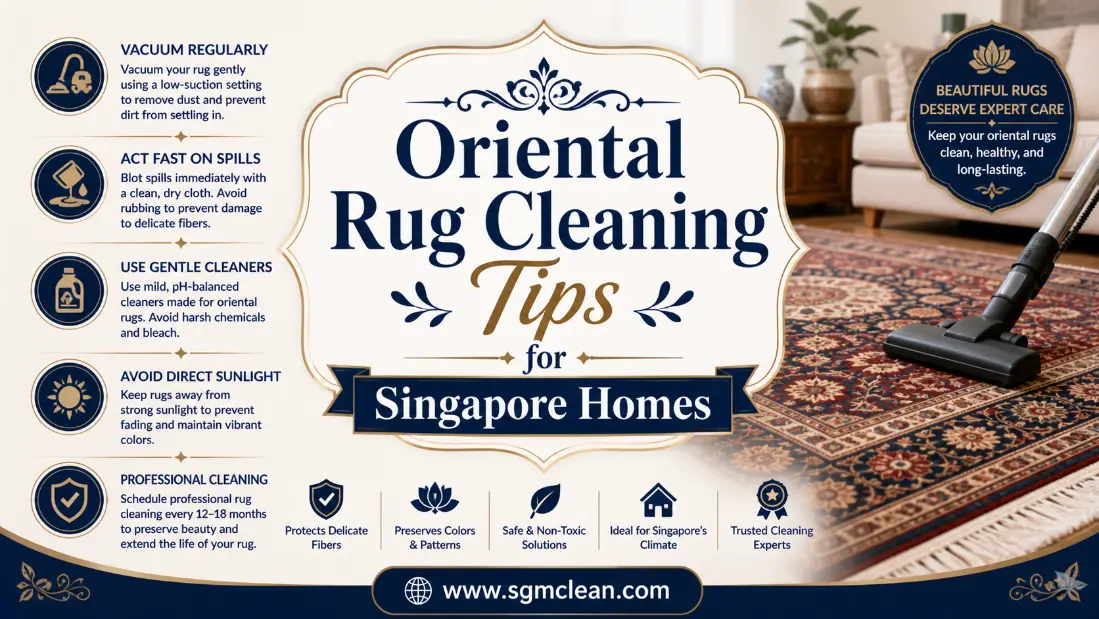
Oriental rugs bring a warmth and character to Singapore homes that few other furnishings can match. Whether it is a Turkish kilim in a minimalist condo, a Chinese silk rug in a heritage home, or a densely knotted Afghani piece in a landed property, these rugs deserve careful maintenance. Singapore’s climate — with its persistent humidity, air-conditioning fluctuations, and tropical dust — creates particular challenges for oriental rug owners. These tips will help you care for your rugs between professional cleans and extend their beauty for years to come.
Understanding Your Oriental Rug Before You Clean It
The term “oriental rug” covers an enormous range of styles, construction methods, and materials. Handmade wool pile rugs behave very differently from flatwoven kilims, and silk rugs require an entirely different approach from cotton-backed tribal pieces. Before you apply any cleaning product or technique to your rug, it helps to understand what it is made from.
Look at the back of the rug — handmade rugs show individual knots or woven weft and warp threads. Feel the pile — silk has a distinctive cool, smooth sheen; wool is warmer and slightly coarser. If you are uncertain about the fibre content or dye type, treat the rug conservatively and consult a professional before attempting any wet cleaning.
Regular Maintenance: The Foundation of Rug Care
Vacuuming Correctly
Vacuum your oriental rug regularly — once or twice a week in high-traffic areas. Always vacuum in the direction of the pile, not against it. Use a low-suction setting and keep the beater bar turned off or raised away from the pile, as rotating brushes can fray delicate fibres and loosen the knot structure over time. Vacuum the underside of the rug occasionally to remove deeply embedded grit, which acts like sandpaper on the foundation fibres from below.
Rotation
Rotate your rug 180 degrees every six months. This distributes foot traffic and UV exposure evenly, preventing uneven wear and fading. Rugs placed near windows or in rooms with afternoon sun are particularly susceptible to fading in specific areas if not rotated regularly.
Rug Pads
Using a quality non-slip rug pad underneath your oriental rug serves multiple purposes: it prevents the rug from sliding, reduces wear on the underside fibres, and allows some air circulation beneath the rug — particularly important in Singapore where trapped moisture can encourage mould growth on the underside of rugs laid on tiled floors.
Dealing with Spills on Oriental Rugs
- Blot — do not rub — using a clean white cloth. Work from the outer edge of the spill inward.
- For liquid spills, blot up as much moisture as possible before applying any cleaning solution.
- Use cold water for most spills. Avoid hot water, which can set stains and cause dyes to bleed.
- Do not soak the rug — excessive moisture is one of the biggest risks for oriental rugs in Singapore’s climate.
- After treating, place a dry towel over the area and press down to absorb remaining moisture, then allow the area to dry completely with good air circulation.
Singapore-Specific Challenges to Watch For
Humidity and Mould
Singapore’s humidity is the primary threat to oriental rugs stored or placed on the floor for extended periods. If a rug develops a musty smell, lift it and check the underside for any signs of mould growth. Ensure good air circulation in the room and use a dehumidifier if necessary. A rug that has developed active mould growth needs professional treatment — attempting to clean it yourself risks spreading spores and embedding them further.
Dust Mites
Dense pile oriental rugs, particularly wool ones, can harbour dust mites in Singapore’s warm, humid conditions. Regular vacuuming reduces the surface population, but professional cleaning with hot water extraction or controlled washing is the only way to effectively address a significant dust mite population embedded in the pile.
Flatwoven Rugs and Moisture
Kilims and dhurries — flatwoven rugs without pile — dry more quickly than pile rugs but can still absorb moisture and develop mould if left on damp floors. Keep them off wet surfaces and ensure the floor beneath is clean and dry.
When to Call a Professional
Some situations call for professional rug cleaning in Singapore rather than home treatment:
- A significant spill that has penetrated through to the backing
- Any sign of mould, musty odour that does not clear with airing
- A rug that has not been professionally cleaned in more than two years
- Visible soiling that vacuuming does not address
- Fringe discolouration or browning at the edges
M Clean SG works with oriental rugs in Singapore homes — from modern condominiums to heritage landed properties. If your rug needs a proper deep clean or you want advice on the right care approach for a specific piece, their team is happy to help. Explore their home cleaning services or get in touch directly for a rug cleaning consultation.
Caring for an oriental rug well is not complicated — it mostly requires consistency, gentle handling, and knowing when to call for professional support. With the right approach, your rug can remain a centrepiece of your home for decades.