
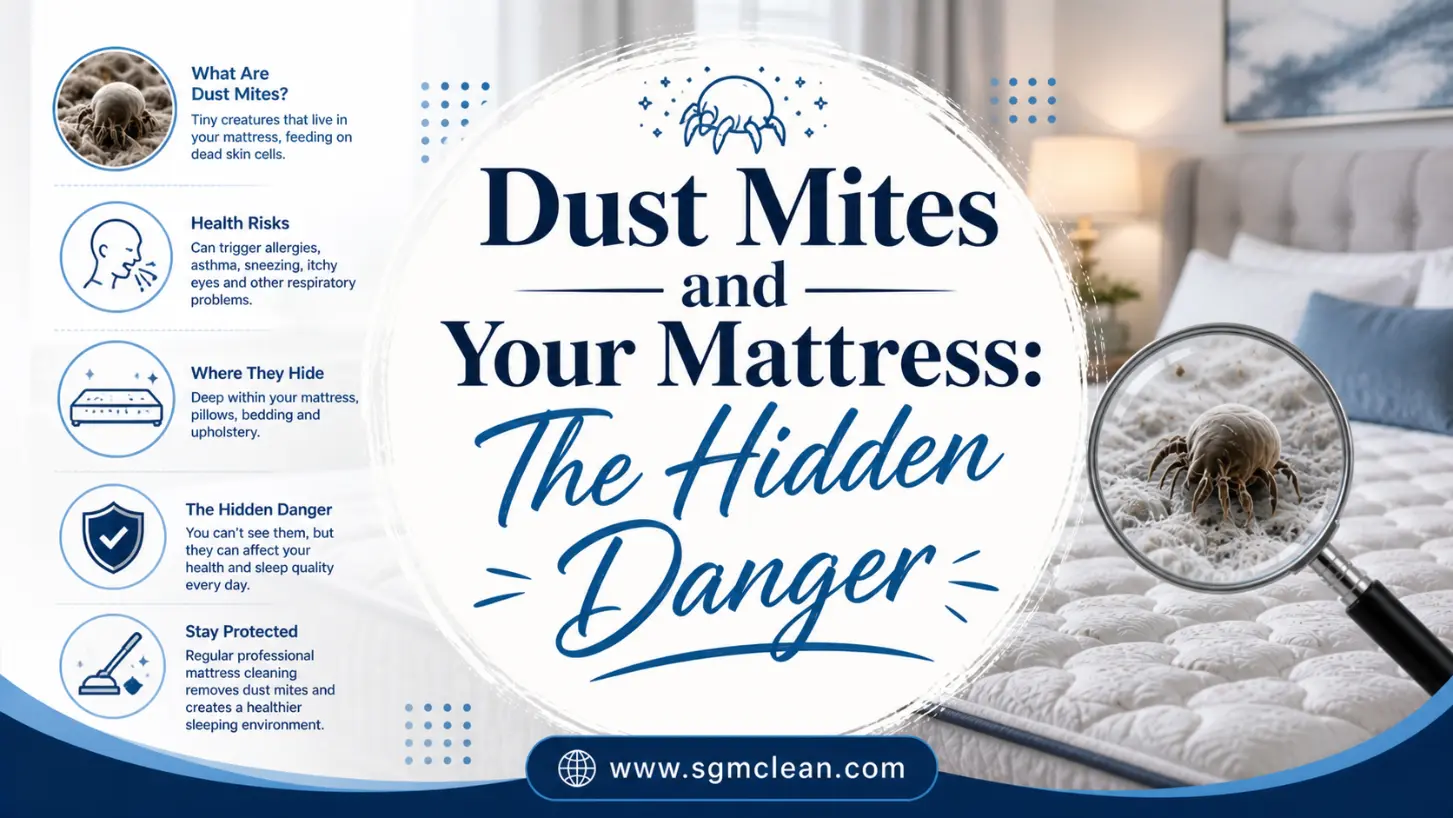
They are invisible to the naked eye, they live in your bed, and they are almost certainly present in your mattress right now. Dust mites are among the most widespread indoor allergens in Singapore and one of the most overlooked contributors to poor sleep quality and respiratory health in the home. Understanding what dust mites are, how they affect you, and how to effectively reduce their presence in your mattress is a practical step towards a healthier sleeping environment — particularly important in Singapore’s climate, which is among the most favourable in the world for mite proliferation.
What Are Dust Mites and Why Do They Favour Singapore?
Dust mites are microscopic arachnids — eight-legged creatures related to spiders and ticks — that measure approximately 0.3 millimetres in length. They are invisible without magnification and live primarily in soft furnishings: mattresses, pillows, upholstered furniture, and carpets. They feed on shed human skin cells, which are shed in large quantities every day and accumulate readily in mattress fabrics and foam.
Dust mites require two specific conditions to thrive: warmth and humidity. They reproduce most rapidly at temperatures between 25 and 30 degrees Celsius and relative humidity above 70 percent. Singapore’s year-round climate provides exactly these conditions — average temperatures consistently within that range and humidity levels regularly exceeding 80 percent outdoors, with indoor levels rarely dropping below 55 to 60 percent even in air-conditioned rooms.
The result is that Singapore mattresses support significantly larger dust mite populations than mattresses in cooler, drier climates. An untreated mattress in a Singapore home can harbour hundreds of thousands of mites across its surface area — a number that accumulates steadily without any visible signs.
The Real Danger: Mite Allergens, Not the Mites Themselves
Dust mites themselves do not bite or cause direct harm. The health concern comes from their waste particles and body fragments, which become airborne during sleep and other mattress-disturbing activities. These particles are extremely fine and remain suspended in the air of the sleeping environment for extended periods after being released.
When inhaled by a sensitised person, dust mite allergens trigger an immune response. The symptoms of dust mite allergy include:
- Nasal congestion, sneezing, and runny nose — particularly noticeable in the morning upon waking
- Itchy, watery, or red eyes
- Coughing and throat irritation during or after sleep
- Aggravated asthma — dust mites are one of the most common asthma triggers in Singapore
- Eczema flares in individuals with skin sensitivity
- General fatigue from disrupted, unrestorative sleep
What makes this particularly insidious is that symptoms often appear upon waking and improve during the day — a pattern that leads many people to attribute their condition to weather, air conditioning, or unrelated causes rather than their mattress. If you or a family member regularly wakes with nasal congestion, itchy eyes, or respiratory symptoms that improve significantly after leaving home, dust mites in the sleeping environment are a leading suspect.
How Dust Mites Accumulate in Your Mattress
The lifecycle of a dust mite is straightforward. Females lay 60 to 100 eggs over a lifetime of two to three months. Each egg hatches in about two weeks, and the new mites mature within another three to four weeks. In ideal conditions — like those found in a Singapore mattress — populations can double every two to three weeks, resulting in exponential growth if left unchecked.
The mites live preferentially in the upper layers of the mattress, where warmth from the sleeping body, moisture, and shed skin cells are most concentrated. This means they are also most active in the zone immediately below the mattress surface — exactly where you sleep.
What Does Not Work: Common Misconceptions
Several widely held beliefs about dust mite control are worth addressing directly:
- Sunning the mattress eliminates mites — Placing a mattress in the sun can kill surface-level mites due to heat and UV exposure, but Singapore’s humidity means the mattress may absorb more moisture than it loses. Sunning is not sufficient for deep mite populations and provides no extraction of allergen-laden mite waste.
- Regular bedsheet washing solves the problem — Washing sheets at high temperature removes mites from bedding, but the mattress itself remains contaminated. Mites immediately re-colonise clean bedding from the underlying mattress.
- Home vacuuming removes mites — Standard vacuum cleaners with ordinary filters remove some surface debris but do not penetrate mattress foam deeply enough to address established mite populations. Industrial-grade vacuums used by professional cleaners are significantly more effective.
Effective Dust Mite Reduction in Mattresses
The most effective approaches to reducing dust mite populations in mattresses combine prevention with professional treatment:
- Use an allergen-barrier mattress protector — A high-quality, dust mite proof mattress encasement creates a physical barrier between the mite population in the mattress and the sleep surface. This is the single most impactful preventive measure available to homeowners.
- Wash bedding weekly at 60 degrees Celsius or above — Temperatures at or above 60 degrees kill mites and neutralise allergens in bedding effectively.
- Maintain bedroom air conditioning and ventilation — Keeping indoor humidity below 50 percent significantly slows mite reproduction. While difficult to achieve consistently in Singapore, good air conditioning and airflow help.
- Book professional mattress cleaning regularly — Hot water extraction and steam sanitising are the most effective methods for reducing deep mite populations and extracting allergen particles from mattress foam. Professional cleaning also removes the accumulated skin cell food source that sustains mite colonies.
For Singapore homeowners dealing with dust mite concerns, M Clean SG provides professional mattress cleaning and sanitising services across HDB flats, condominiums, and landed properties island-wide. Their cleaning process uses hot water extraction and appropriate sanitising treatments designed to reduce dust mite populations and improve the hygiene of your sleeping environment. For more information or to make a booking, visit the Contact Us page.
Dust mites in your mattress are not a problem you can see — but their effects on your sleep and health are real and measurable. Taking practical steps to reduce their presence, and maintaining a regular professional cleaning schedule, is one of the most effective things you can do for the respiratory health and sleep quality of everyone in your household.