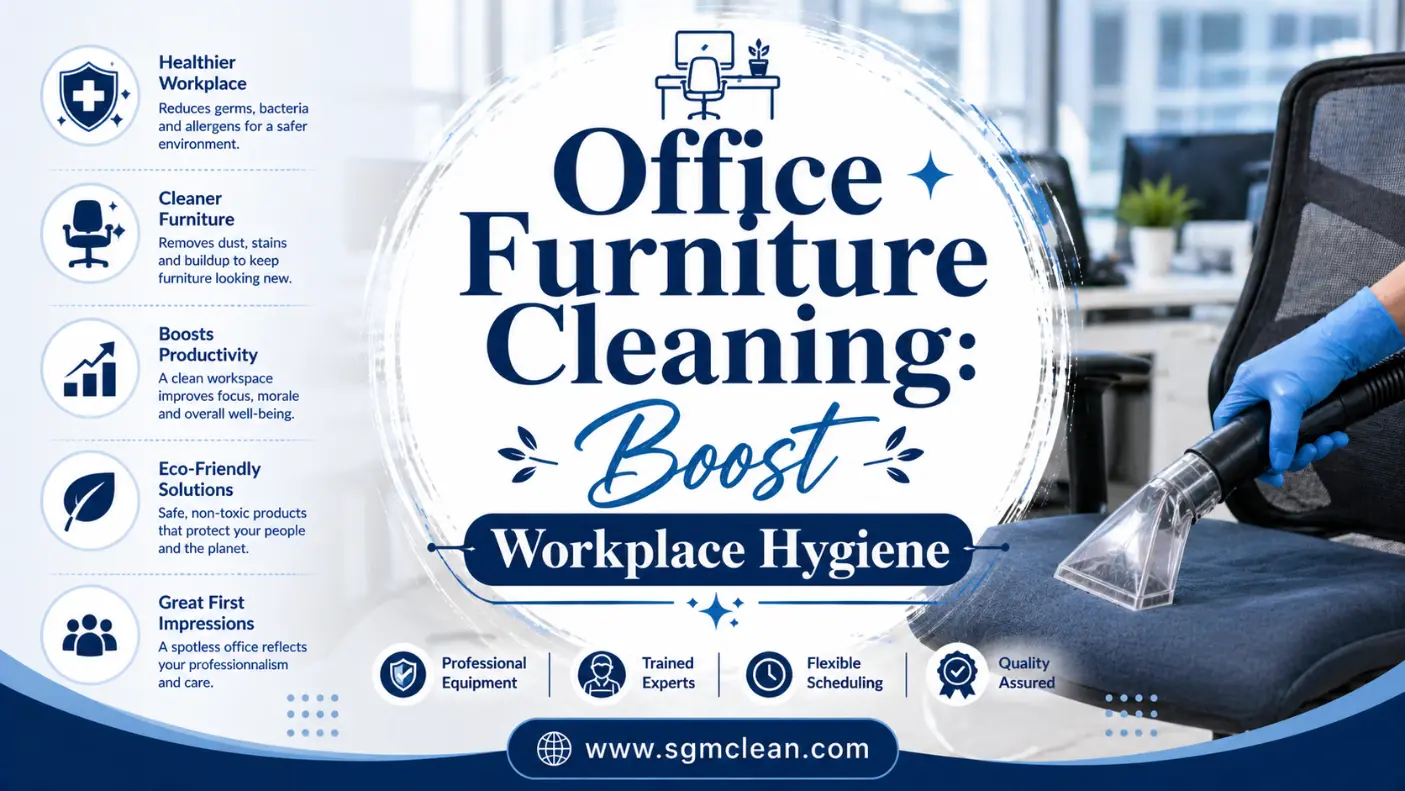
Office furniture is among the most heavily used surfaces in any workplace, yet it is consistently among the least maintained. Desks are wiped, floors are cleaned, and windows are kept clear — but the chairs staff sit on for eight hours a day, the upholstered meeting room sofas, the fabric partition panels, and the waiting room seating often go months without any dedicated cleaning. In Singapore’s warm, humid climate, the hygiene implications of neglected office furniture are more significant than they might appear. Understanding what builds up in office furniture — and what effective cleaning looks like — is the starting point for a genuinely hygienic workplace.
What Accumulates in Office Furniture Over Time
Office furniture faces a specific combination of soiling factors. Unlike residential furniture, which is used by a limited number of people, office furniture is shared — often by multiple staff members across different shifts or hot-desking arrangements. This multiplies the rate at which body oils, perspiration, skin cells, and general soiling accumulate on upholstered surfaces.
The most affected pieces in a typical Singapore office include:
- Desk chairs — The seat pan, backrest, and armrests absorb perspiration and body oils continuously throughout the workday. In Singapore’s warm conditions, this happens at a faster rate than in air-conditioned offices in cooler climates.
- Meeting room sofas and chairs — Used by different people throughout the day, these accumulate soiling from multiple sources and are rarely cleaned as part of standard office cleaning contracts.
- Reception and waiting area seating — High-traffic, client-facing areas where first impressions matter. Visibly soiled or worn seating reflects on the business before a word is spoken.
- Fabric partition panels — These large upholstered surfaces collect ambient dust and airborne particles and contribute to the overall allergen load of the office air.
Why Office Furniture Cleaning Directly Affects Workplace Hygiene
In a sealed, air-conditioned office environment, the air circulates continuously. Allergens and fine particles released from dirty upholstered furniture — dust mite waste, bacteria, mould spores — remain suspended in the air and are inhaled by staff throughout the workday. This is a measurable contributor to indoor air quality issues that are frequently attributed to other causes such as the air conditioning system itself.
Staff who experience persistent nasal congestion, frequent sneezing, or eye irritation in the office — particularly if symptoms improve during weekends away from the workplace — may be responding to allergen levels elevated by uncleaned furniture. This connection is rarely made, and the root cause goes unaddressed while the symptoms continue.
From a surface hygiene perspective, the armrests, seat edges, and backrest surfaces of office chairs are among the highest hand-contact surfaces in any workplace. Regular wiping of hard surfaces addresses part of this, but fabric surfaces require appropriate cleaning methods to genuinely reduce bacterial load rather than just displacing it.
The Workplace Impression: Why It Matters for Business
Clean, well-maintained office furniture creates a professional impression for clients, visitors, and prospective hires. The reverse is also true — stained seating in a meeting room, discoloured chair fabric, or tired-looking reception sofas communicate a lack of attention to detail that can undermine the credibility a business works hard to establish through other means.
In Singapore’s competitive business environment, the physical condition of your workspace is part of how your organisation presents itself. Office furniture cleaning is not a behind-the-scenes maintenance task — it is part of the professional standard that clients and partners observe during every visit.
What Professional Office Furniture Cleaning Involves
Professional cleaning of office furniture follows a systematic process appropriate to each material and item type:
- Fabric office chairs — Hot water extraction or dry foam cleaning removes embedded oils, bacteria, and allergens from seat pans and backrests. Industrial extraction equipment ensures appropriate drying in Singapore’s climate.
- Leather and faux-leather chairs — pH-balanced leather cleaning solutions remove surface oils and grime, followed by conditioning treatment to maintain suppleness and extend the useful life of the chair.
- Meeting room sofas and upholstered seating — Treated as residential upholstery with appropriate methods matched to the fabric type and soiling level.
- Hard surface furniture — desks, table tops, shelving — Cleaned with appropriate surface-specific solutions. Wood surfaces require non-abrasive, moisture-controlled methods; glass and metal surfaces are treated separately.
Integrating Office Furniture Cleaning Into Your Maintenance Programme
The most practical approach is to include office furniture cleaning as a scheduled component of the broader workplace maintenance programme, rather than treating it as a reactive measure triggered only when furniture looks obviously dirty. For most Singapore offices, a professional furniture cleaning session every three to six months for heavily used seating is appropriate. Less frequently used pieces — boardroom chairs, occasional seating — can be scheduled on an annual basis.
Between professional sessions, a simple daily maintenance habit of wiping chair armrests and desk surfaces with an appropriate antibacterial cloth slows accumulation and maintains the standard achieved by professional cleaning.
For businesses across Singapore looking to improve workplace hygiene through professional office furniture cleaning, M Clean SG provides commercial furniture cleaning services for offices, co-working spaces, and all types of commercial premises. Their team works around your office schedule to minimise disruption while delivering a thorough, professional result. Visit the Contact Us page to discuss a cleaning programme tailored to your workplace.
Office furniture cleaning is one of the most straightforward ways to improve workplace hygiene, air quality, and professional presentation simultaneously. Making it a regular, planned part of your maintenance calendar is a decision that benefits your staff, your clients, and your business’s reputation.